Chilean Fox Terrier
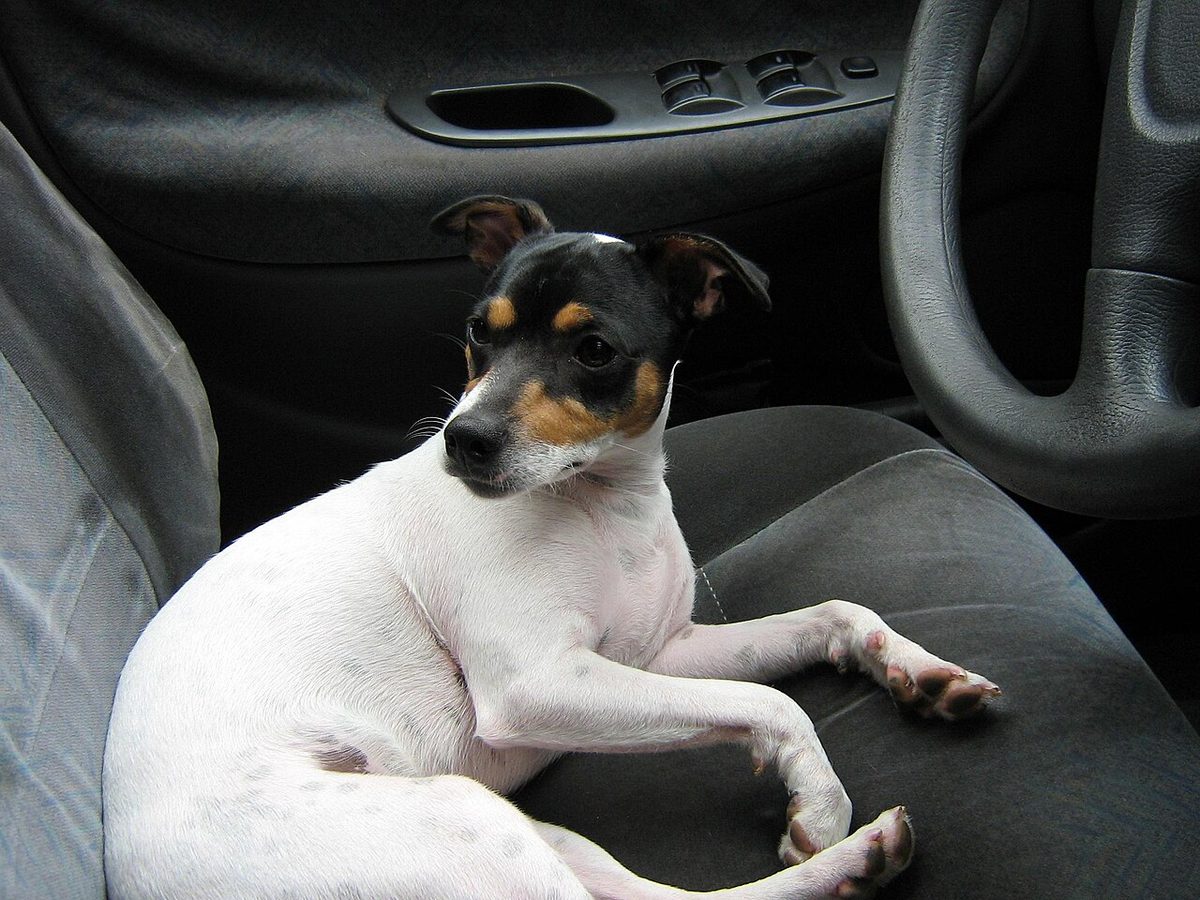

- Origin
- Chile
- Type
- Terrier
- Size
- Small
- Height
- 28–38 cm (11–15 in)
- Weight
- 4–8 kg (9–18 lb)
- Coat
- Short
- Colors
- White with black and tan, brown and tan, or blue and tan markings
- Status
- Recognised by the Kennel Club de Chile; not recognised by the FCI
The Chilean Fox Terrier, also called the Chilean Terrier, is a small short-coated terrier and the first dog breed to come from Chile. It was bred to kill rats and mice, and dates from the late 19th century, when the Smooth Fox Terrier was crossed with the Ratonero Bodeguero Andaluz.
History
European settlers brought Smooth Fox Terriers to Chile in colonial times to keep down rats and other small rodents. The breed took shape on the estates of south-central Chile, where it adapted easily to a rough country life, often living in the stables. It was kept by laborers and landowners alike.
In the late 19th century many country people moved to the cities and took their terriers with them. The dogs settled into town life and were put to work clearing rats from factories and new housing districts. For much of the 20th century the breed was seen as a working-class dog, and the people who were starting organized dog breeding in Chile were more interested in foreign breeds. It stayed a familiar household dog all the same, helped by the comic strip Condorito, whose title character has a Chilean Terrier named Washington.
The Kennel Club de Chile recognises the breed, and Alianz Canine Worldwide has classed it in its Group 3 since 2011. The FCI does not yet recognise it. Shows for the breed have been held in Chile for many years, and it is now also found in Bolivia, Argentina, Ecuador and other South American countries.
Appearance
The coat is short and mainly white, with black and brown markings; dark spots on the skin sometimes show through the white. The ears are set high and fold forward to a V-shaped tip. Males stand 32–38 cm at the withers, with 35 cm the ideal, and weigh 5–8 kg. Females stand 28–35 cm, ideally 32 cm, and weigh 4–7 kg.
Temperament
The breed is described as attentive and lively, restless and inclined to bark like its English ancestors, and also brave and loyal. It adapts to the varied climates of Chile and is still used to hunt mice in the countryside, while in the city it is kept as a companion.
Facts on this page were checked against Wikipedia and may have changed since.