Pyrenean Mountain Dog

- Origin
- France
- Type
- Livestock guardian
- Size
- Giant
- Height
- 65–80 cm (26–31 in)
- Weight
- 55–75 kg (120–165 lb)
- Coat
- Long, thick double coat
- Colors
- White, with or without patches of badger, wolf gray or tan
- Life span
- About 11 years
- Status
- Recognised by the FCI, AKC and The Kennel Club
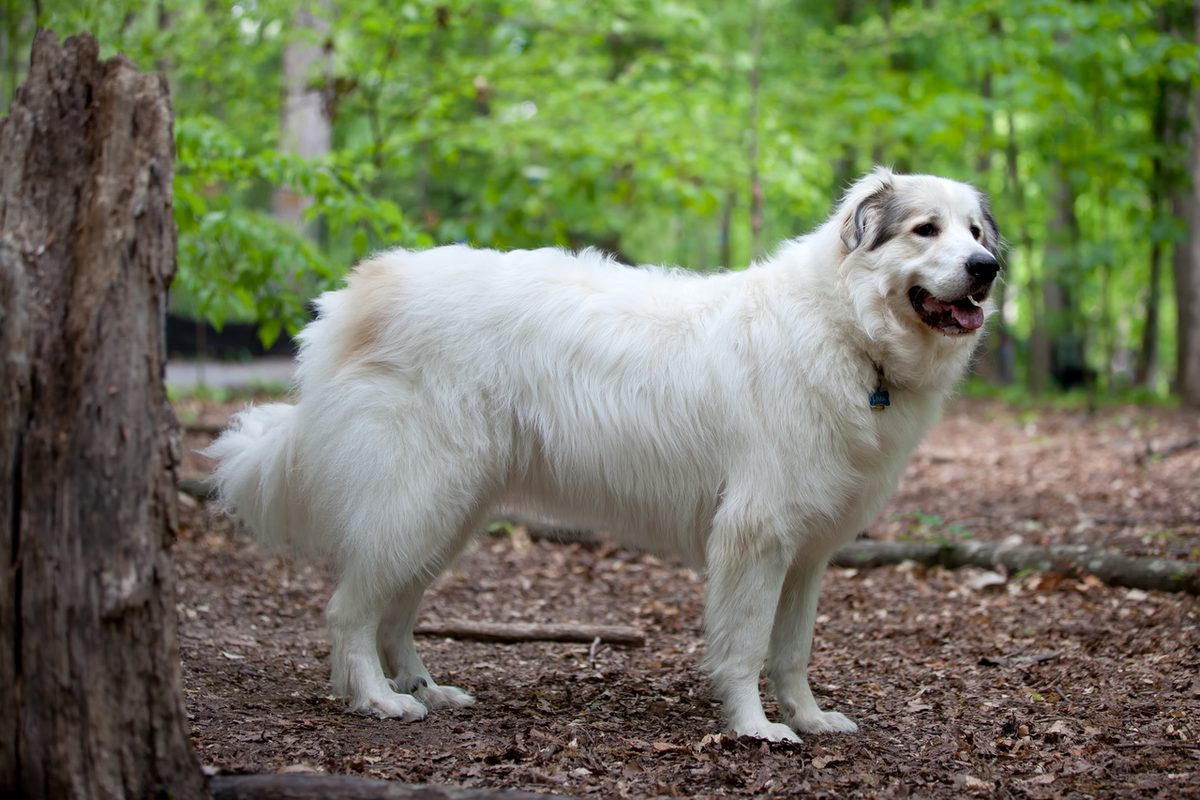
The Pyrenean Mountain Dog is a French livestock guardian from the French side of the Pyrenees, the mountains that divide France from Spain. In France it is commonly called the Patou, and in the United States it is known as the Great Pyrenees. Shepherds have long used it to protect flocks from wolves and bears, and it still does that work in the Pyrenees, the French Alps and the United States.
History
The name Patou comes from pâtre, a French word for shepherd. The Pyrenean Mastiff from the Spanish side of the mountains is a close relative but a separate breed.
In the 17th century a dog of this type was brought to the court of Louis XIV, where it became fashionable, and the king named it the Royal Dog of France. Nobles used the dogs to guard their châteaux.
After wolves were wiped out in the Pyrenees in the 19th century, numbers fell sharply, and by the early 20th century the breed was close to extinction. Bernard Senac-Lagrange, a French aristocrat, is credited with saving it. He founded a breed club in 1923 and wrote the first standard. The Fédération Cynologique Internationale accepted the breed in 1955. The dogs reached North America in the early 1930s, and the American Kennel Club adopted its own standard in 1935.
When wolves crossed back into France from Italy in the 1990s, the Pyrenean was the guardian chosen, with government support. By 2009 more than 1,000 were guarding flocks in the Alps and 500 in the Pyrenees. Shepherds in the Pyrenees who used the dogs reported 90 percent fewer losses to predators.
Appearance
This is a large, powerfully built dog. Under the French standard, males stand 70 to 80 cm (28 to 31 in) at the shoulder and females 65 to 75 cm (26 to 30 in). Adults usually weigh 55 to 75 kg (120 to 165 lb). The muzzle is long, broad and slightly pointed, the lips are tight, and the small triangular ears lie flat against the head. The long tail hangs low at rest and curls over the back when the dog is alert. The hind legs have double dewclaws, and a dog without them is disqualified from showing.
The double coat is long and thick, with a fine, dense undercoat, and is longest around the neck, the tail and the backs of the legs. Most dogs are white, sometimes with patches of badger, gray or tan, usually on the head.
Temperament
The breed is a working guardian that stays with the flock and defends it. In the Pyrenees some hikers have been attacked by dogs protecting their sheep. A leaflet now warns walkers and cyclists how to behave around them.
Care and health
A 2024 study in the United Kingdom reported a median lifespan of 10.9 years, below the average for all dogs. A 2005 Swedish insurance study found that 58 percent of Pyrenean Mountain Dogs had died by the age of 10, against 35 percent across all breeds.
Facts on this page were checked against Wikipedia and may have changed since.