Porcelaine
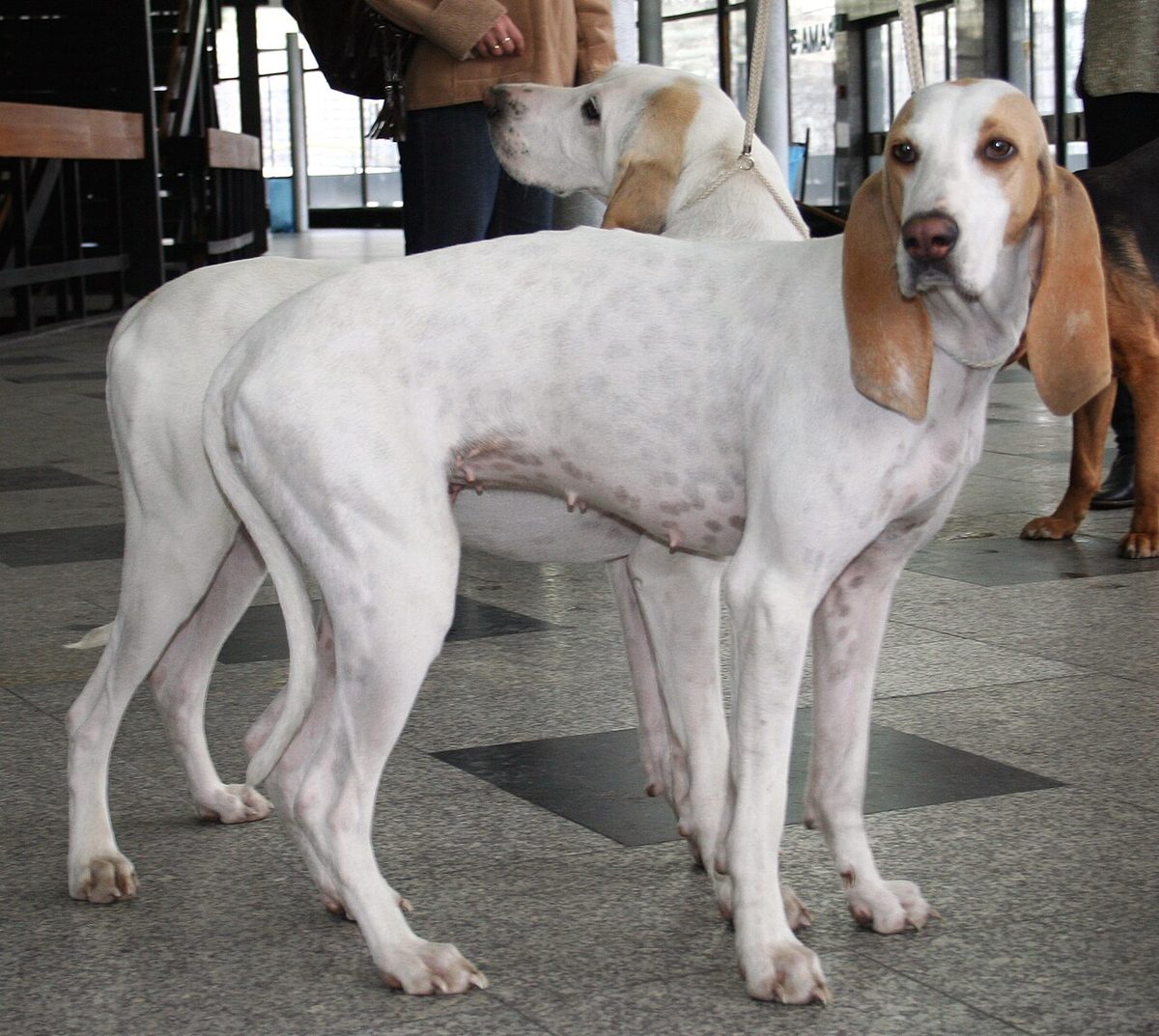

- Origin
- France
- Type
- Scenthound
- Size
- Large
- Height
- 53–58 cm (21–23 in)
- Coat
- Very short, fine and shiny
- Colors
- White, sometimes with orange spots
- Status
- Recognised by the FCI
The Porcelaine is a French scenthound. It used to be known as the Briquet Franc-Comtois, after the historical region of Franche-Comté in eastern France.
History
The Porcelaine is thought to descend from the English Harrier, some of the smaller Swiss Laufhunds and the Montaimboeuf, a hound that is now extinct. The breed died out after the French Revolution and was later reconstructed. It has been recorded in France since 1845 and in Switzerland since 1880.
Appearance
The name comes from the shiny coat, which is said to make the dog look like a porcelain figurine. The hair is very short and very fine. It is white, sometimes with orange spots, which often fall on the ears. The skin underneath should be white with black mottling that shows through the coat.
The nose is black with very wide nostrils, the eyes are black, and the long ears hang down. The neck is long, and the tail is thick at the root and tapers to a point. Dogs stand 55 to 58 cm at the withers and bitches 53 to 56 cm.
Temperament
The Porcelaine is a hunting dog that works in packs, usually on hare and roe deer and, in the north, on wild boar. It has the keen nose of a scenthound and is a fierce hunter, bred to work independently without many commands from the huntsman. Small numbers are also bred in Italy for boar hunting, though hunters there still prefer their native hounds.
Facts on this page were checked against Wikipedia and may have changed since.