Basset Artésien Normand
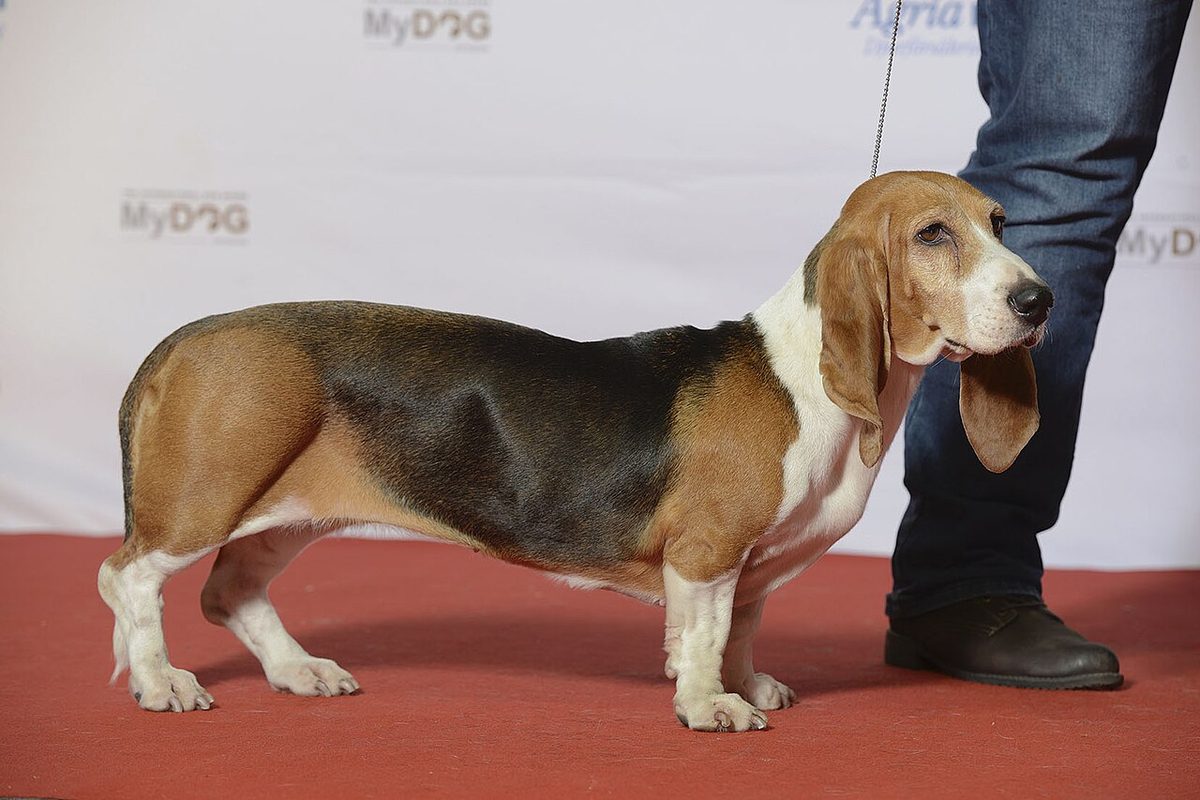

- Origin
- France
- Type
- Scenthound
- Size
- Small
- Height
- 30–36 cm (12–14 in)
- Weight
- 15–20 kg (33–44 lb)
- Coat
- Short
- Colors
- Fawn and white, or tricolor with a black blanket
- Status
- Recognised by the FCI and UKC
The Basset Artésien Normand, or Norman Artesian Basset, is a short-legged hound developed in France. “Basset” is the French term for hounds of this low-set kind.
History
This breed and the better-known Basset Hound go back to the same stock: the short-legged hounds of northern France in the early nineteenth century, whose build came from a form of dwarfism. The two then went separate ways. English breeders in the late nineteenth century made the Basset Hound a heavier dog, at first by crossing in Bloodhounds. French breeders kept their bassets lighter in bone and put hunting ability first.
Records of the French bassets as a pure breed began in 1870. Two strains were developed from the shared ancestral type, one with straight front legs, the Basset d’Artois, and one with crooked front legs, the Normand. A breed club was formed in 1910, and the breed took its present name in 1924.
Bassets are hounds to be followed on foot, and their short legs keep them from getting too far ahead of the hunter. The Basset Artésien Normand hunted rabbits and other small game, either alone or in a pack. Today it is bred mainly as a pet.
The original club is the Club français du Basset Artésien Normand & du Chien d’Artois. The Fédération Cynologique Internationale recognizes the breed as number 34 in Group 6, Scenthounds, one of six basset breeds on its list. The United Kennel Club in the United States also recognizes it, in its Scenthound Group.
Appearance
The Basset Artésien Normand stands 30 to 36 cm at the withers and is considerably longer than tall, with height to body length in a ratio of about 5 to 8. It weighs around 17 kg. The coat is short. It is either tricolor, fawn and white with a black blanket across the back, or bicolor, fawn and white. The head and the long ears are distinctive.
Temperament
The breed is expected to be calm and good-natured.
Facts on this page were checked against Wikipedia and may have changed since.