American Pit Bull Terrier
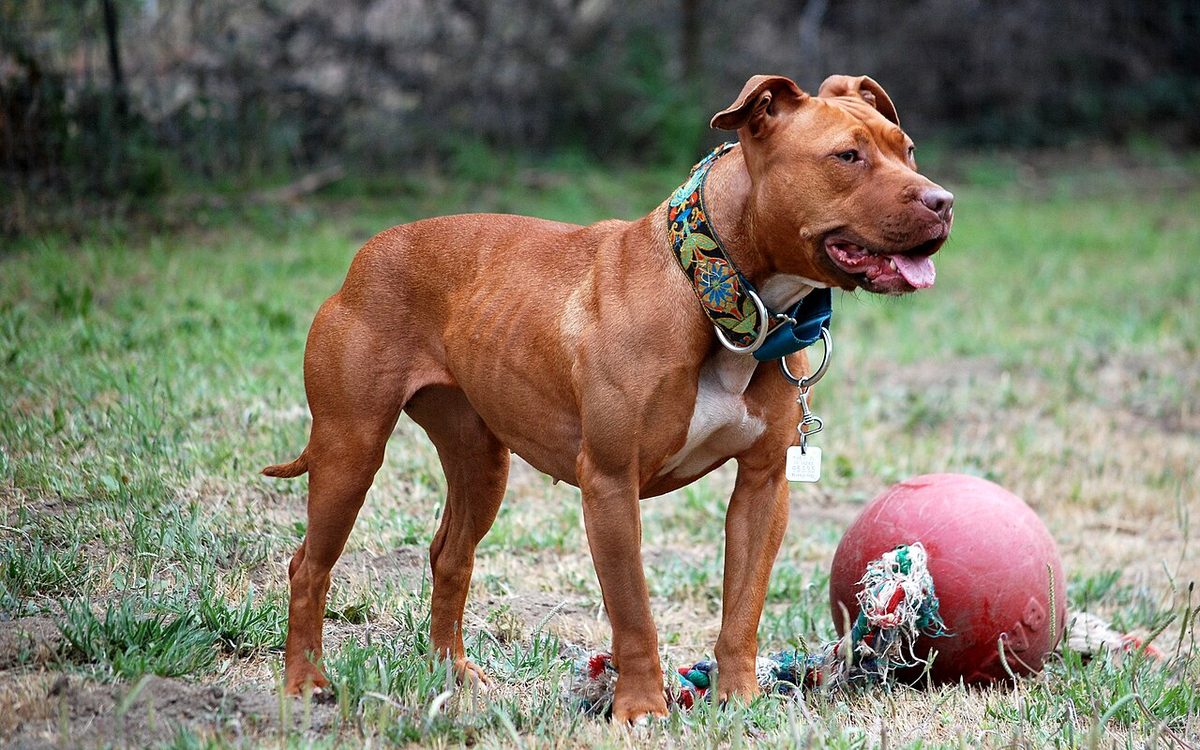

- Origin
- United States
- Type
- Terrier
- Size
- Medium
- Height
- 43–53 cm (17–21 in)
- Weight
- 13–27 kg (30–60 lb)
- Coat
- Short, smooth, glossy and stiff
- Colors
- Many colors and patterns, except merle
- Life span
- 12–14 years
- Status
- Recognised by the UKC and the American Dog Breeders Association; not recognised by the AKC
The American Pit Bull Terrier is a medium-sized, short-haired, solidly built dog developed in the United States from dogs brought over from England. The United Kennel Club and the American Dog Breeders Association recognise it; the American Kennel Club does not. The term “pit bull” is often used loosely for a whole group of dogs, but some breeders and supporters hold that this is the only breed the name properly belongs to.
History
Until the mid-19th century, breeders in England crossed the Old English Terrier with the Old English Bulldog, both now extinct, to combine the terrier’s gameness with the bulldog’s strength. The result was known as the bull and terrier. These dogs were used in bull and bear baiting until Britain banned those sports in 1835, after which dog fighting, cheaper and easier to hide, took their place.
Bull and terriers reached America between about 1845 and 1860 and became the direct ancestors of the breed. The United Kennel Club recognised it as the American Pit Bull Terrier on February 10, 1898. In the early 20th century the dogs caught semi-wild cattle and hogs, hunted hogs, drove livestock and lived as family companions.
Today the breed works as a companion, a sport dog in events such as weight pulling, a police dog and a therapy dog. It also makes up most of the dogs used in illegal dog fighting in America. Many countries, and some parts of the United States, restrict or ban pit bull-type dogs, including this breed.
Appearance
Males usually stand 45 to 53 cm (18 to 21 in) and weigh 15 to 27 kg (35 to 60 lb). Females stand 43 to 50 cm (17 to 20 in) and weigh 13 to 22 kg (30 to 50 lb). The muscles are smooth and well defined. The eyes are round to almond-shaped, the ears small to medium and carried half pricked or rose, and the tail fairly thick, tapering to a point.
The coat is short, smooth, glossy and stiff to the touch. Most colors and patterns are accepted, with solid and tuxedo patterns typical, but neither registry accepts merle.
Temperament
The UKC describes the breed’s essential qualities as strength and confidence, with an eagerness to please, great enthusiasm, high intelligence and a willingness to work. The ADBA standard treats aggression towards people as a disqualifying fault.
A study by the US Centers for Disease Control and Prevention found that Rottweilers and pit bull-type dogs accounted for 67% of dog-bite deaths in the United States between 1979 and 1998 where the breed was known. Other studies note that news coverage exaggerates problems and that stocky, short-haired dogs are often wrongly reported as pit bulls.
Care and health
The breed tends to be hardy, with an average lifespan of 12 to 14 years. Conditions seen in it include hip dysplasia, which is more common than average, degenerative myelopathy, kneecap dislocation, thyroid problems and congenital heart defects. Skin trouble such as allergies and demodex mange also occurs.
Facts on this page were checked against Wikipedia and may have changed since.