Hanover Hound

- Origin
- Germany
- Type
- Scenthound
- Size
- Large
- Height
- 48–55 cm (19–21.5 in)
- Weight
- 25–40 kg (55–88 lb)
- Coat
- Short
- Colors
- Light to dark reddish fawn, brindled, sometimes with a mask
- Status
- Recognised by the FCI and UKC
The Hanover Hound is a German hunting and tracking dog. Its main job is to follow the blood trail of wounded game. It is still a very rare breed.
History
The breed’s ancestry is traced to the hounds of the Celts of Central Europe around 500 BC. From these came the lead hound, a powerful tracking dog with a blunt muzzle and broad nose, which held an important place in hunting from the time of Charlemagne and was used to find stags and wild boar. The Hanover Hound developed almost directly from it.
When firearms changed hunting, hunters needed dogs that could track animals that had been shot and wounded, and the lead hound suited the task. In 1885 the breed was given the name Hanoverian Bloodhound, and the Hirschmann Association, founded at that time, took on the work of preserving it. In 1912 it was crossed with a lighter, more agile type better suited to rough ground, the Bavarian Mountain Hound. The FCI recognised the Hanover Hound in 1964 and the United Kennel Club on January 1, 1996. The breed was first brought to France in the 1980s.
Appearance
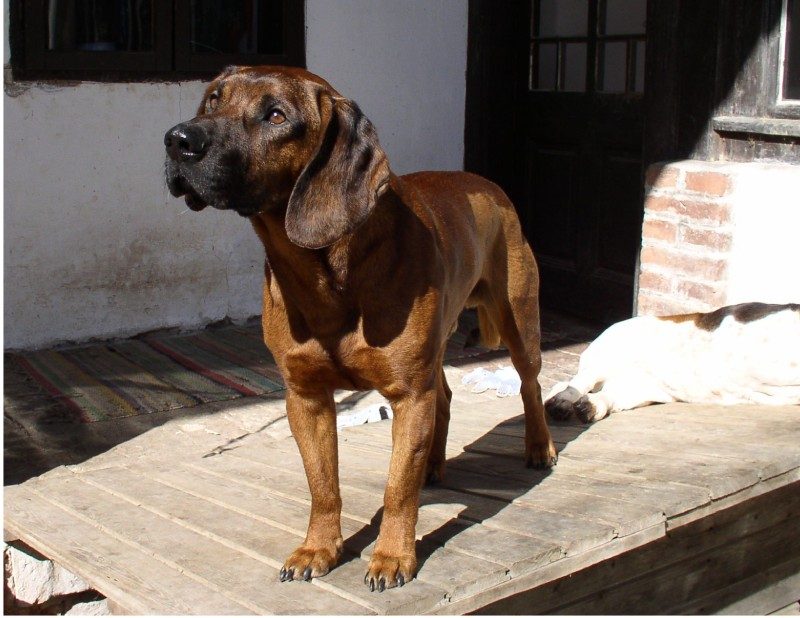
The Hanover Hound is sturdily built, with a large head, strong jaws and a deep chest. Males stand 50–55 cm and weigh 30–40 kg (66–88 lb). Females are usually a little smaller, at 48–53 cm and 25–35 kg (55–70 lb). The short coat ranges from light to dark reddish fawn with a brindled look, and some dogs have a mask. The forehead is slightly wrinkled, and the skull is slightly rounded and broadest between the ears. The ears are set high and are broad and smooth, usually with bluntly rounded tips. The tail is long, set high and barely curved.
Temperament
The Hanover Hound is described as calm and assured, and persistent and single-minded on a trail. It tends to keep its distance from strangers but is kind and friendly with other dogs. As a working dog it does best where it has room to exercise and is not well suited to city life.
Facts on this page were checked against Wikipedia and may have changed since.