Slovakian Rough Haired Pointer

- Origin
- Slovakia
- Type
- Gundog
- Size
- Large
- Height
- 57–68 cm (22–27 in)
- Coat
- Harsh, wiry and of moderate length, with whiskers
- Colors
- Gray, from gray-brown to silver; white allowed on chest and feet
- Status
- Recognised by the FCI; not recognised by the AKC
The Slovakian Rough Haired Pointer is a gundog developed in Slovakia after World War II. It goes by several similar English names, among them Slovak Wirehaired Pointer and Slovak Pointing Griffon, but it is not the same dog as the Wirehaired Pointing Griffon, a smaller breed with a slightly longer coat.
History
The breed was created by crossing German Wirehaired Pointers, Weimaraners and the Cesky Fousek, with some contribution from the Pudelpointer. Its developer, Koloman Slimak, wanted a dog with great stamina that would track, point and retrieve on land and in water, and that could handle game of every size from birds and hares up to deer.
At one stage the Slovak breeders asked the Weimaraner Club of Germany to accept the dog as a Rough-haired Weimaraner. The request was turned down.
The FCI accepted the breed and classes it as a continental pointing dog of the braque type. It was first brought to the United Kingdom in 1997 and was featured at Crufts in 2007. The North American Versatile Hunting Dog Association also recognizes it. The American Kennel Club does not yet.
Appearance
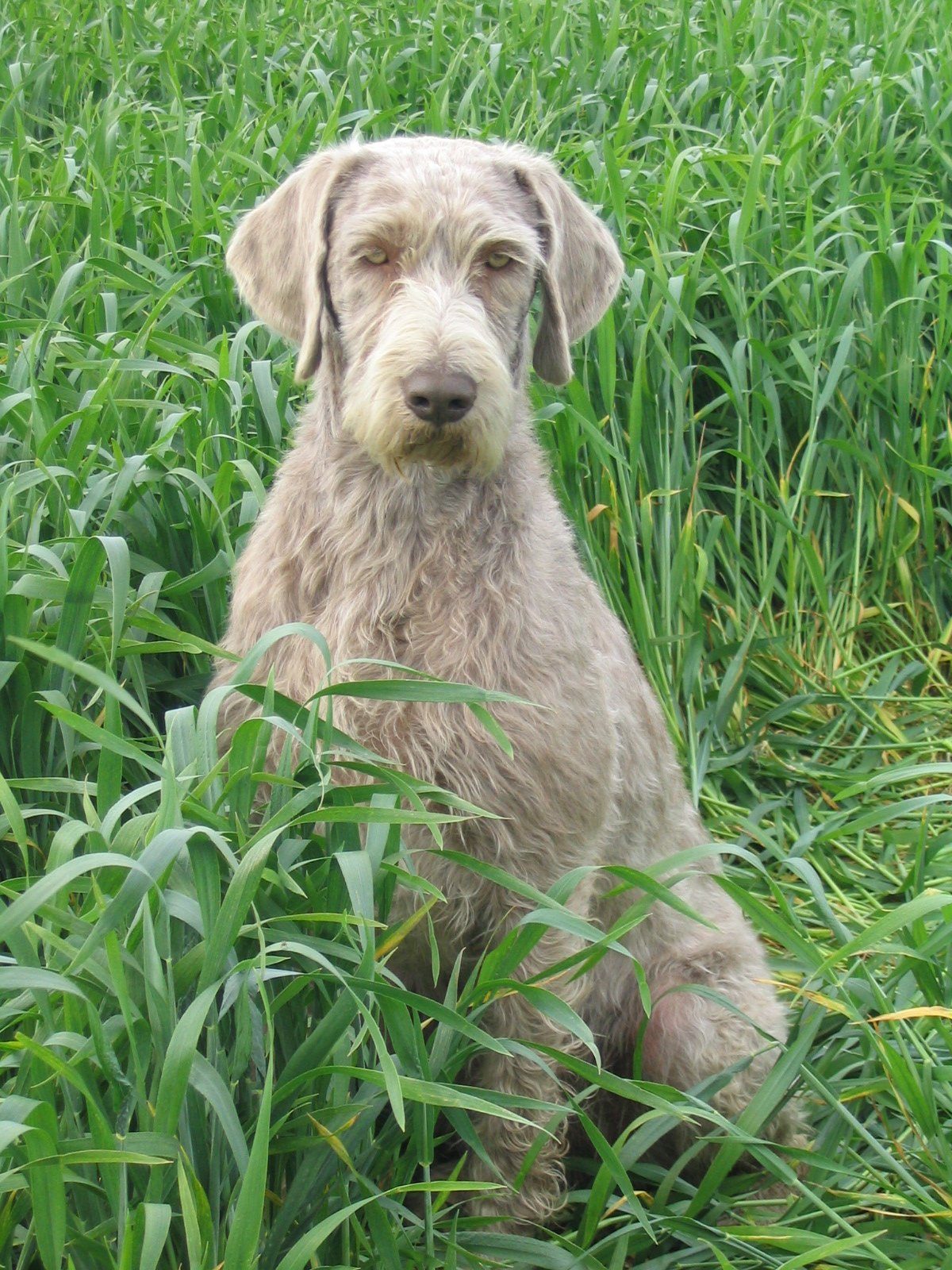
In build the dog resembles the three breeds it was made from. It has an alert, intelligent expression and a rough coat of harsh, wiry hair of moderate length, with whiskers on the face like those of the German Wirehaired Pointer. The color is any shade from a tweedy gray-brown to the silver-gray of the Weimaraner, and lighter and darker grays may mix through the coat to the point of speckling. White is allowed on the chest and feet.
Under the FCI standard, puppies may have blue eyes but adults’ eyes must be amber, and the nose, eyelids and pads are dark. The back is straight. Males should stand 62–68 cm (24–27 in) at the withers and females 57–64 cm (22–25 in), with the body a little longer than the dog is tall. The same standard calls for the tail to be docked to half its length.
Facts on this page were checked against Wikipedia and may have changed since.