Harrier

- Origin
- England
- Type
- Scenthound
- Size
- Medium
- Height
- 48–53 cm (19–21 in)
- Weight
- 20–30 kg (45–65 lb)
- Coat
- Short and hard
- Colors
- A variety of color patterns
- Life span
- 12–15 years
- Status
- Recognised by the FCI, AKC and The Kennel Club
The Harrier is a medium-sized hound bred to hunt hares by following their trail. It looks like an English Foxhound but is a little smaller, though not as small as a Beagle. Hounds of this kind have been in use since the mid-13th century, and the name points to the work: a hare hound.
History
Sources disagree widely about where the Harrier came from. One account says the earliest dogs were crossed with Bloodhounds, the Talbot Hound and even the Basset Hound. Another suggests crosses of English Foxhound with Fox Terrier and Greyhound. A third sees it simply as a Foxhound bred down in size.
The Harrier has a long history as a working pack hound in England, used on foxes as well as hares. Numbers fell from World War I onward as private packs were broken up. By the middle of the 20th century fewer than 50 packs remained, and tight controls on selling registered hounds meant the breed all but vanished outside the hunting world. The Kennel Club withdrew recognition in the early 1970s. By 2022 there were 13 packs and fewer than 750 Harriers in the United Kingdom.
Enthusiasts in France and the United States kept the breed going as a show dog; the American Kennel Club has recognised it since 1885. The Kennel Club recognised it again in January 2020, and in 2022 Harriers were shown at Crufts for the first time in 124 years.
Appearance
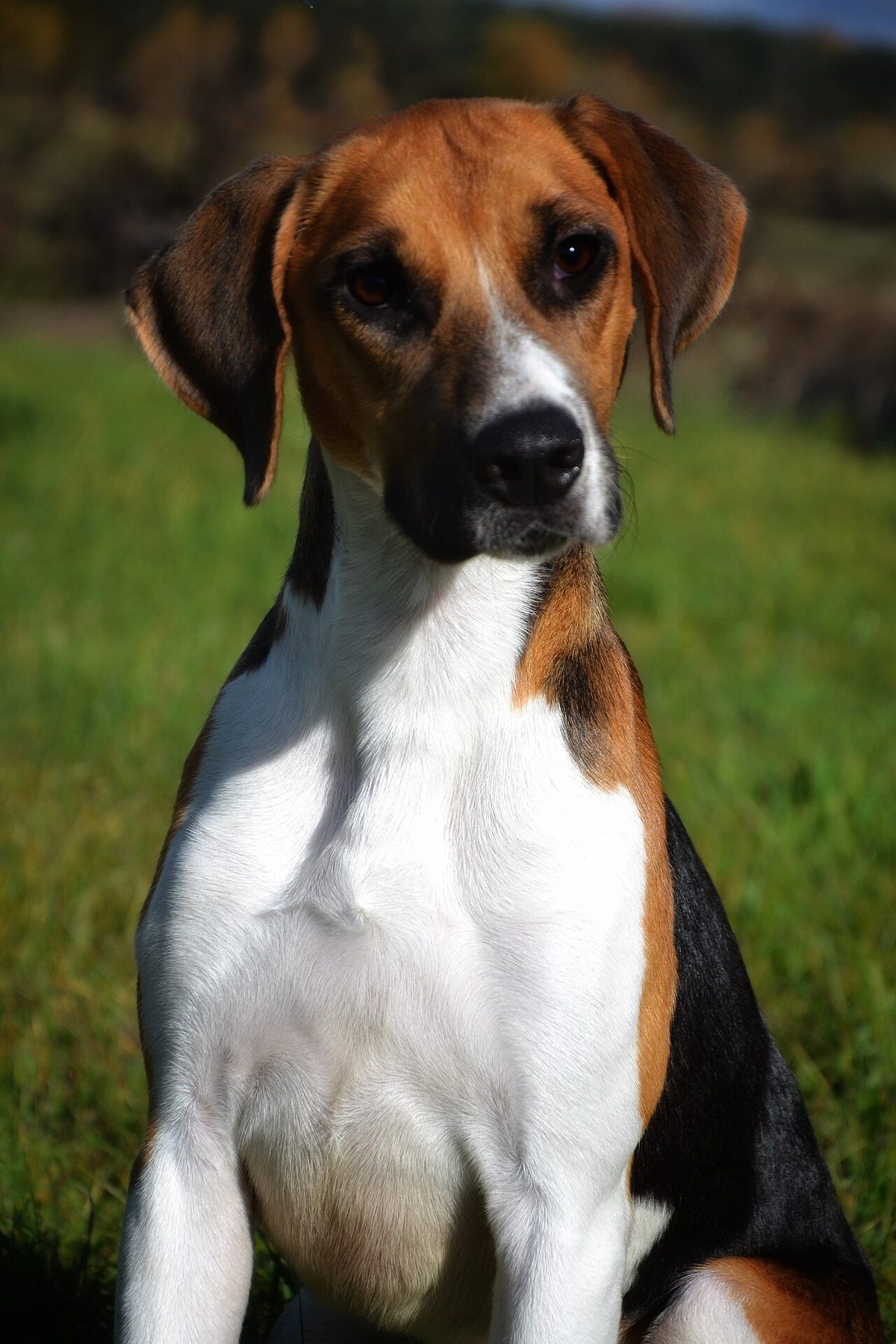
Harriers stand 48 to 53 cm (19 to 21 in) at the shoulder and weigh 20 to 30 kg (45 to 65 lb). This is a muscular hound with heavy bone for strength and stamina, slightly longer than it is tall, with a level back. The skull is broad, the muzzle strong and square, the nose wide and black, and the eyes brown or hazel. The ears are rounded and hang down. The tail is of medium length and carried high without curling over the back, and the feet are tight and cat-like. The coat is short and hard and comes in a variety of color patterns.
Temperament
The Harrier is cheerful, sweet-tempered and tolerant of people, and it is excellent with children. As a pack hound it gets on well with other dogs and prefers to live in company, whether of people, dogs or both. It should be supervised around other kinds of pets unless it has grown up with them. It likes to explore, sniff and follow a trail, so it needs a leash or a secure enclosure.
Care and health
The coat sheds and needs only an occasional brushing to remove dead hair. The Harrier was bred to run all day and needs daily exercise such as long, brisk walks or runs; without it, the dog can become hyperactive, overweight or destructive. Given that exercise, it adapts well to an ordinary home.
The lifespan is generally 12 to 15 years. Hip dysplasia is known to occur in the breed.
Facts on this page were checked against Wikipedia and may have changed since.