Polish Hound

- Origin
- Poland
- Type
- Scenthound
- Size
- Medium
- Height
- 55–65 cm (22–26 in)
- Weight
- 20–32 kg (44–71 lb)
- Coat
- Thick double coat
- Colors
- Brown below with black over the back
- Life span
- 13–14 years
- Status
- Recognised by the FCI
The Polish Hound, or Ogar Polski, is a hunting dog native to Poland. It has a keen sense of smell and the stamina to work in harsh conditions, and its imposing build made it popular with the Polish nobility.
History
The first description of the breed is in a 1779 book on the natural history of domestic and wild animals by Krzysztof Kluk. Historians believe it arose from crossing Bloodhounds, brought to Poland in the Middle Ages, with local hounds. In 1819 Jan Szytier wrote about both a Polish Hound and a Polish Scent Hound in his hunting guide.
Numbers fell during the Second World War. The effort to revive the breed afterward produced two types: a lighter-boned hound bred by Colonel Józef Pawłusiewicz and a heavier-boned one bred by Colonel Piotr Kartawik. The FCI recognized the heavier type as the Ogar Polski in 1966.
Appearance
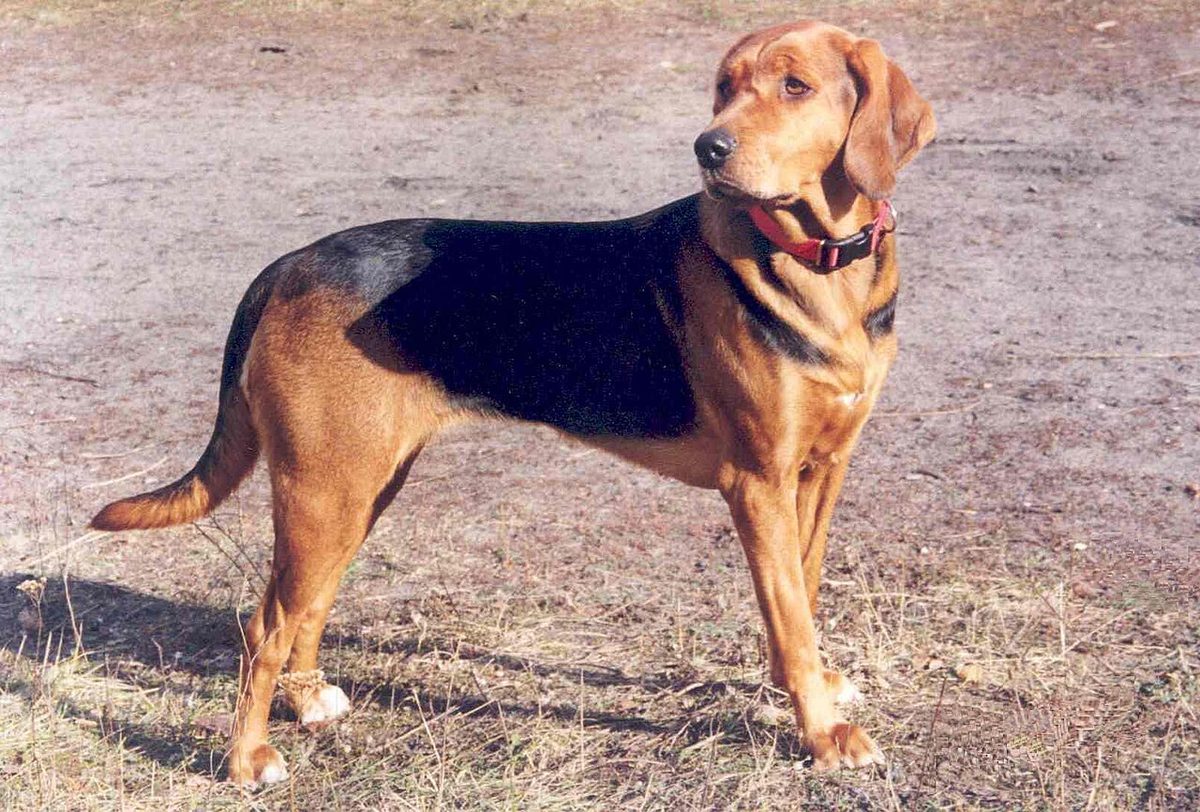
The Polish Hound is a medium-sized dog, strong and sleek, with heavy bone. It stands 55–65 cm tall. Males weigh about 25–32 kg (55–70 lb) and females 20–26 kg (44–57 lb). The usual coloring is brown on the underside with black over the top from the neck to the tail. The thick double coat keeps out water.
Temperament
The breed is intelligent and easy to train, though slow to mature. It is known as a calm, affectionate and very loyal dog that gets along with other dogs and settles quickly in new surroundings. Its voice is resonant and clear, which is valued in the hunt.
Polish Hounds are protective of their territory, but opinion is divided on whether they make good guard dogs. Some say this territorial streak makes them defensive toward intruders; others say they are too mild to be any threat to a stranger.
Facts on this page were checked against Wikipedia and may have changed since.