Estonian Hound
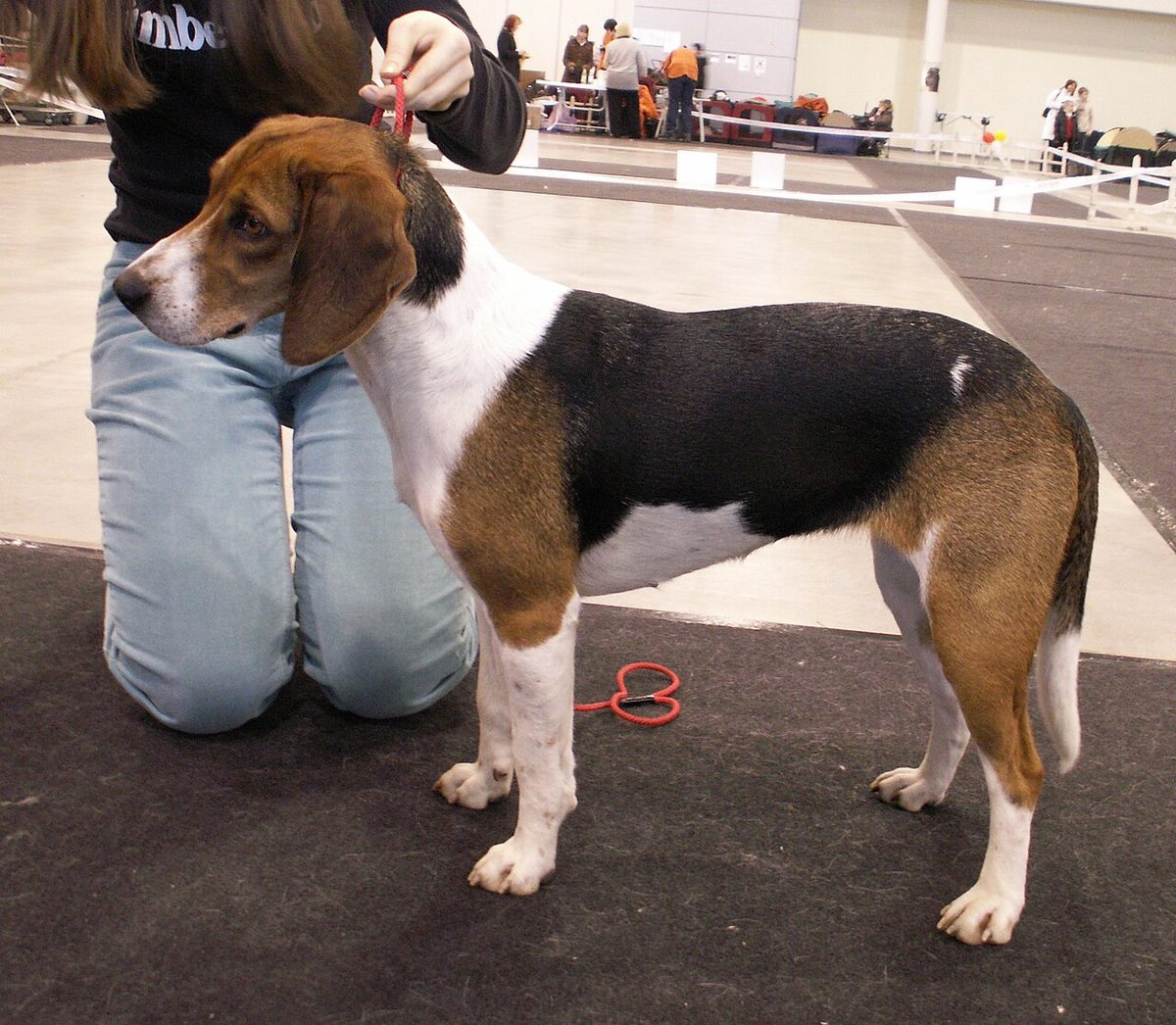

- Origin
- Estonia
- Type
- Scenthound
- Size
- Medium
- Height
- 43–53 cm (17–21 in)
- Weight
- 15–20 kg (33–44 lb)
- Coat
- Short, rough and shiny
- Colors
- White with black and red markings, or white with yellow or red
- Status
- Recognised by the FCI
The Estonian Hound is a medium-sized scent hound and the only dog breed developed in Estonia. It was bred for hunting, and in Estonia it is used on hare and fox.
History
The breed dates from 1947, when the Soviet Union’s ministry of agriculture and economy ordered every Soviet republic to establish its own breed of hunting dog. The new hounds were to replace the large hunting dogs then in use, which were blamed for a sharp fall in Estonia’s wildlife. Only dogs up to 17 inches tall were to be allowed to hunt. Several foreign breeds were crossed with local hunting dogs, and the result was an agile, hard-driving hound that has been very popular ever since. After Estonia regained its independence, the Estonian Hound was declared the national dog. The FCI officially recognised the breed in September 2019.
Appearance
The Estonian Hound is a strong, muscular dog with good bone, drop ears and no folds in its skin. It stands 43–53 cm tall and weighs 15–20 kg. The coat is short and rough and should shine; the undercoat is weak. The eyes are dark brown. Most dogs carry black patches of any size on dark-pigmented skin. Blackish-brown or red patches and a saddle marking on the back are also allowed, but the tip of the tail must be white.
Temperament
This is a happy, pleasant dog, calm and balanced yet active, and very intelligent. It is friendly and should never be aggressive. It needs to be socialized and shown new places and situations, or it can be a little timid. It gets on with other dogs, and usually with cats if it has known them from puppyhood. Estonian Hounds love human attention and can become upset when left alone. They are affectionate and easy to teach, which matters because they must learn not to chase hoofed game: in Estonia they may hunt only hare and fox. The breed’s voice when hunting is described as pleasant.
Facts on this page were checked against Wikipedia and may have changed since.