Finnish Hound

- Origin
- Finland
- Type
- Scenthound
- Size
- Medium
- Height
- 52–61 cm (20–24 in)
- Weight
- 20–25 kg (44–55 lb)
- Coat
- Short, dense and coarse double coat
- Colors
- Tricolor: tan and black with small white markings
- Status
- Recognised by the FCI
The Finnish Hound, called suomenajokoira in Finnish, is a hound bred to hunt hare and fox. It is one of the most popular dogs in its home country: in 2013 it was the second most registered breed in Finland.
History
The breed came out of a breeding program in the 1800s that drew on French, German and Swedish hounds. The aim was a hound able to work on hilly ground and in deep snow.
Appearance
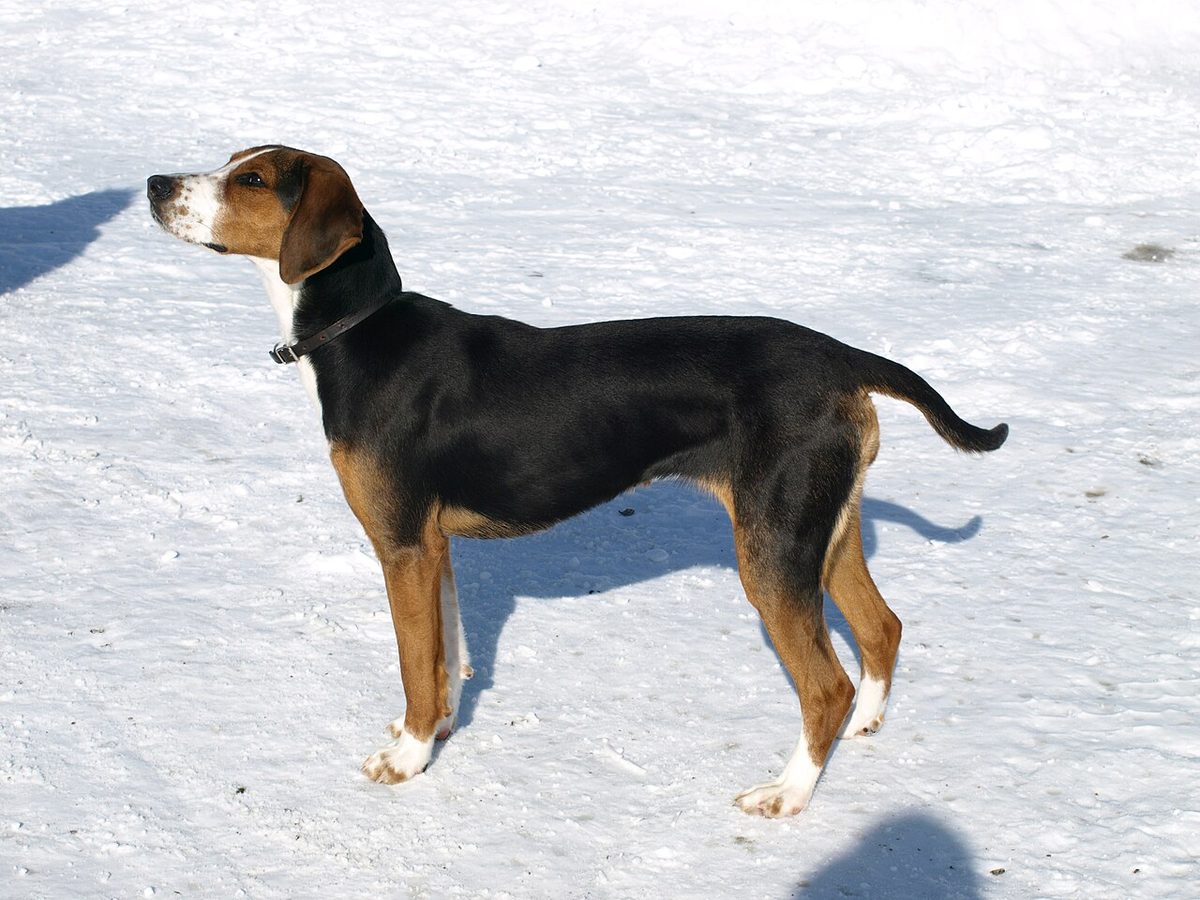
The Finnish Hound is a medium-sized, strongly built dog, longer than it is tall. Males stand 55–61 cm (22–24 in) and females 52–58 cm (20–23 in). Adults usually weigh 20–25 kg (44–55 lb).
The top of the skull is domed and the muzzle is as long as the skull, with a slight but clear stop. The nose must be black. The eyes are dark brown and the ears hang down. The body is muscular, with a deep chest that is plain to see, and the tail is carried low in a slight arch.
The coat is short, dense and coarse, with an undercoat. It is always tricolor: mostly tan and black, with small white markings on the head, neck, chest, lower legs and the tip of the tail.
The hound trots lightly, with a long stride, and keeps its back level and firm as it moves.
Temperament
The Finnish Hound is calm and friendly, and should never be aggressive. At work it is another matter: an energetic hunter with great stamina and a versatile tracker, which works on its own and follows its quarry with eager barking.
Care and health
Finnish Hounds can inherit progressive cerebellar ataxia. Signs appear early, sometimes at three months, and include tremors, worsening loss of coordination and delayed development. The cause has been traced to a mutation in a gene called SEL1L, and a genetic test now exists so that breeders can avoid passing it on.
The breed is also known to suffer occasionally from hip dysplasia, cardiomyopathy, lymphoma, black hair follicular dysplasia and atopic dermatitis.
Facts on this page were checked against Wikipedia and may have changed since.