Cão da Serra de Aires

- Origin
- Portugal
- Type
- Herding
- Size
- Medium
- Height
- 45–55 cm (17.5–21.5 in)
- Weight
- 17–27 kg (37–60 lb)
- Coat
- Long, goat-like, without undercoat
- Colors
- Yellow, chestnut, gray, fawn, wolf gray or black, with tan marks
- Status
- Recognised by the FCI and UKC
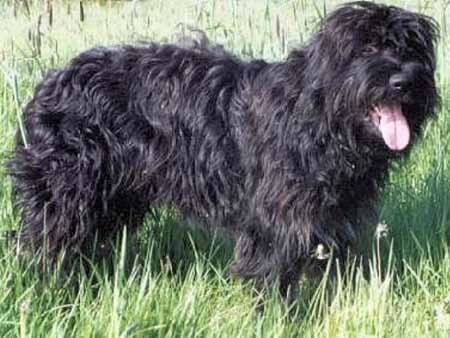
The Cão da Serra de Aires, known in English as the Portuguese Sheepdog, is a medium-sized herding dog and one of Portugal’s native regional breeds. It is named after the Serra de Aires, a mountain in the Alentejo region. Its furry face and lively ways have earned it the nickname cão macaco, the “monkey dog”.
History
The ancestors of the breed herded cows, sheep, goats, horses and even pigs in the Serra de Aires and across the Alentejo. As with most working breeds, there are few or no records from before 1900. The dog belongs to the old type of European sheepdog and is believed to be closely related to the Pyrenean and Catalan Sheepdogs. It is also thought to descend from Briards brought to Portugal in the early 1900s by the Conde de Castro Guimarães and crossed with Pyrenean Sheepdogs.
The first standard was written by Antonio Cabral and Felipe Morgado Romeiros and accepted by the Portuguese Kennel Club. The FCI recognised the breed in 1996, and the United Kennel Club placed it in its Herding group in 2006. It has since been exported and has become a popular companion in Europe. Most are now kept as pets.
Appearance
Males stand 45 to 55 cm (17.5 to 21.5 in) at the withers, with females slightly smaller, and the dogs weigh 17 to 27 kg (37 to 60 lb). The body is long. The coat is long, of medium thickness and goat-like in texture, with no undercoat, which leaves the dog less protected in extreme weather. Colors include yellow, chestnut, gray, fawn, wolf gray and black, with tan marks. White hairs may be scattered through the coat, but large white patches are not accepted.
The ears hang, set high and close to the head. The tail is long and is never docked; a natural bobtail disqualifies a dog under the standard.
Temperament
The FCI standard describes the ideal dog as exceptionally intelligent and very lively. Portuguese Sheepdogs take part in agility, obedience, flyball, tracking and herding events.
Care and health
No recurring health problems have been documented for the breed. The dogs are prone to ehrlichiosis, a disease carried by ticks, and abdominal tumors occur in older dogs.
Facts on this page were checked against Wikipedia and may have changed since.