Eurohound
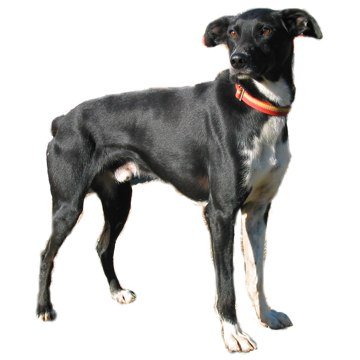

- Origin
- Scandinavia
- Type
- Crossbreed
- Coat
- Short in first-generation crosses
- Colors
- Often black with white, or solid with spotted patches
- Status
- Not recognised by the major kennel clubs
The Eurohound is a crossbreed, not a formal breed. It is a type of sled dog made by crossing the Alaskan husky with a pointing breed, most often the German Shorthaired Pointer, and it is bred for sled dog racing.
History
After World War II, skijor and pulka racing grew quickly in Norway and the neighboring Scandinavian countries. These races used small, fast teams of one to four dogs over short, hilly courses of 15–30 km (9–19 miles). The Norwegian Sled Dog Racing Association required purebred dogs, and the German Shorthaired Pointer soon became the favorite. By the early 1970s there was a recognisable sled pointer, a pointing dog bred to pull, not to hunt.
In the 1970s Scandinavian mushers also took up long-distance racing in the North American style, and Norwegians began importing Alaskan huskies. Because the Alaskan husky is itself a crossbreed, it could not race in Norway until 1985, when the association dropped its purebred rule.
After that, mushers were free to breed their best performers together whatever their breed. They mixed Alaskan huskies, sled pointers and even greyhounds for Nordic-style racing. These dogs became popular across Europe and later in North America, helped by the rise of dryland sports such as bikejoring and canicross. The name eurohound was coined by Ivana Nolke to tell the European racing dogs apart when they were imported into Alaska.
Appearance
Eurohounds are bred for working ability and health, not for a uniform look. The husky side comes from tightly bred sprint racing lines and brings the ability to pull over great distances in deep cold. The pointer side brings energy and sprinting speed.
A first-generation cross, half pointer and half husky, has a short coat like a German Shorthaired Pointer and looks much like a hunting dog. Half-dropped ears are common, as is a black coat with white blazing, or a solid color with patches of spots. Some dogs are spotted all over. The eurohound is sleeker than a husky and can reach 25 miles per hour.
When a first cross is bred back to an Alaskan husky, the pups can have thicker coats suited to longer races, and they look more like huskies as the share of pointer falls. Most distance mushers want only about one-eighth pointer in a dog. Crosses of sled pointers with greyhounds or salukis are called Greysters.
Care and health
The short coat suits sprint races, where dogs do not rest or sleep out on the trail. In temperatures below zero, sprint-racing eurohounds are often housed indoors or in heated barns, unlike Alaskan huskies, which cope with the cold.
Facts on this page were checked against Wikipedia and may have changed since.