Barbet

- Origin
- France
- Type
- Gundog
- Size
- Medium
- Height
- 51–64 cm (20–25 in)
- Weight
- 14–27 kg (30–60 lb)
- Coat
- Long, woolly and curly
- Colors
- Black or brown, sometimes with white; also fawn, gray, cream and pied
- Life span
- 13–15 years
- Status
- Recognised by the FCI, AKC and The Kennel Club
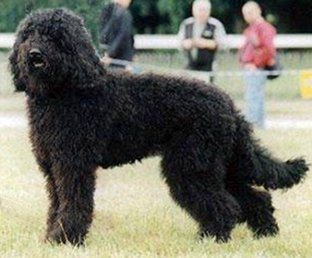
The Barbet is a medium-sized water dog from France and a rare breed. Its name comes from the French word barbe, meaning beard. It is best known as a retriever of ducks, geese and other fowl in the marshes, wetlands, estuaries and coasts of France.
History
Dogs called barbets existed in various forms over the centuries. Some were companions or guard dogs, but most were all-round flushing and working dogs. The word gradually came to mean any dog with a long, curly or woolly coat, and the wet, dirty work of the water retriever gave French the 19th-century saying “muddy as a barbet”. Around the late 18th and early 19th centuries the same type of dog was called the barbet in France, the barbone in Italy and the Pudel in Germany, and for nearly a hundred years barbets and poodles were treated as one breed.
The Barbet came close to extinction after the Second World War. French breeders set about reviving it in the 1970s, and 307 dogs were registered in France between 1975 and 2001. Crosses with the Standard Poodle and other breeds have made the modern Barbet noticeably taller than the old one, and dogs with more Poodle blood tend to have smaller, tighter curls.
The Société Centrale Canine and the Fédération Cynologique Internationale list the breed in Group 8, with the retrievers, flushing dogs and water dogs. It arrived in the United States in 1994 and was recognised by the American Kennel Club in 2020. The first Barbet came to the United Kingdom in 2001, and most British dogs descend from two females imported from France in 2007. The Kennel Club recognised the breed in April 2018, when about 140 Barbets were living in the country.
Appearance
The Barbet is a classic water dog with a long, woolly, curly coat. Most are black or brown, sometimes with white markings; fawn, gray, cream and pied are rarer. Males usually stand 53 to 64 cm (21 to 25 in) and weigh 18 to 27 kg (40 to 60 lb). Females stand 51 to 58 cm (20 to 23 in) and weigh 14 to 23 kg (30 to 50 lb).
Temperament
The Barbet is described as friendly, obedient and intelligent, and many love swimming and playing in water. It is a capable waterfowl retriever, and it takes hunting and water tests in France and field trials in Germany. In the United Kingdom most are pets, with a few working as gundogs, agility dogs and search-and-rescue dogs.
Care and health
The coat never stops growing and needs regular trimming and grooming, or it will mat.
The Barbet is a fairly healthy breed with a life expectancy of 13 to 15 years, though its rarity means there is little data. Hip dysplasia and epilepsy occur, and like most long-eared dogs it is prone to ear infections. The small population limits genetic variety: studies in 2006 and 2013 found inbreeding coefficients of 12.4% and 9.1%, both very high.
Facts on this page were checked against Wikipedia and may have changed since.