Bakharwal Dog
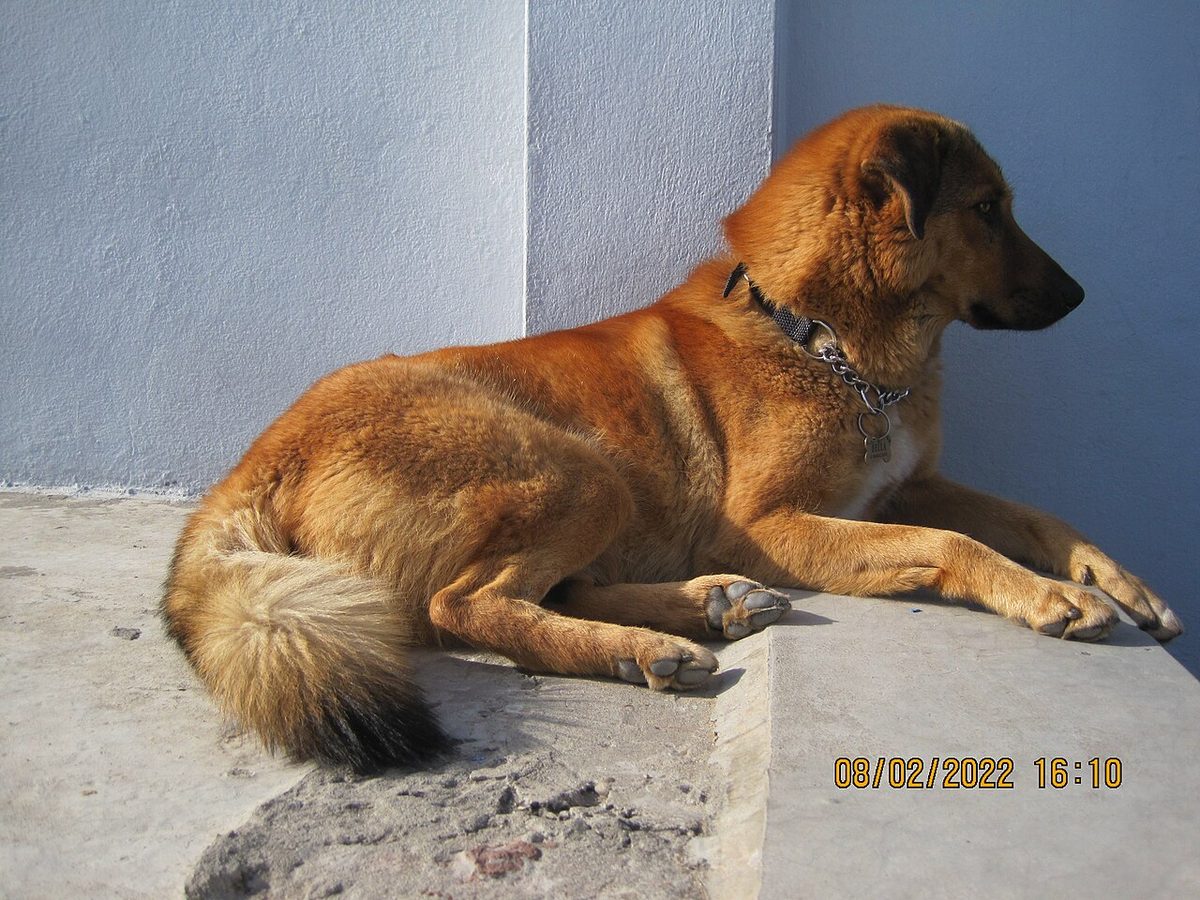

- Origin
- India
- Type
- Livestock guardian
- Size
- Large
- Height
- 61–76 cm (24–30 in)
- Coat
- Thick double coat
- Colors
- Mostly black with white on the toes and chest; also black and tan, red, fawn, pied, sable, white and brindle
- Status
- Not recognised by the major kennel clubs
The Bakharwal Dog is a livestock guardian from northern India, found in Ladakh and across the Pir Panjal Range of Jammu and Kashmir. For centuries the Bakerwal, Gujjar, Gaddi and Jat communities, along with other people of Jammu and Kashmir and Himachal Pradesh, have bred it to guard their goats, sheep and cattle and their homes.
History
The breed is said to have originated in Ladakh. One view is that it comes from crosses between the Tibetan Mastiff and the Indian pariah dog; other writers call it the oldest Indian dog, one that has lived alongside Kashmiri nomads for centuries. Some scientists place it among the oldest herding dogs, with roots in Central Asia.
Numbers have fallen sharply. Separatist militants in Jammu and Kashmir shot the dogs to stop them raising the alarm, and by keeping herders away from the high pastures they left many dogs to catch disease and die. Cases of rabies have also been reported. A study has described the breed as on the verge of extinction, and local communities have asked for it to be treated as endangered.
Appearance
The Bakharwal is a powerful, heavy-boned dog of medium to large size, agile and sturdy, with a furry coat and a plumed tail. It looks like a smaller Tibetan Mastiff. Two kinds are described, the general Bakharwal and the Ladakhi Bakharwal. Most dogs are black with white on the toes and chest; black and tan, red, fawn, pied, sable, white and brindle also occur.
Temperament
This is a working guardian. Together with the Gaddi Kutta it is used to guard sheep, farms and homes in Himachal Pradesh and in Jammu and Kashmir, and nomadic groups keep it to protect both their livestock and their camps. It has also been used by the Indian police.
Care and health
The dogs are traditionally fed a meatless diet, mainly bread made from rice chaff and maize, with milk. Females have one litter a year.
Facts on this page were checked against Wikipedia and may have changed since.